Creative Arts In Emotional Healing
Using creative art in your healing journey is a powerful and expressive tool. It can lead to emotional healing and personal growth that harnesses the therapeutic potential of artistic expression.
We recognise the profound connection between creativity and emotional well-being, offering clients a unique avenue for exploring, processing, and transcending their emotional challenges.
Research Supporting Using Creative Art Therapy
Research indicates that engaging in artistic activities can reduce stress, anxiety, and depression while enhancing emotional resilience and self-awareness. Creative art therapy has been shown to help individuals process and express complex emotions, trauma, and grief. The act of creating art can activate different regions of the brain associated with emotional regulation and self-reflection, providing valuable insights into one’s emotional landscape.
How we use Creative Art at the Brain Hug Clinic:
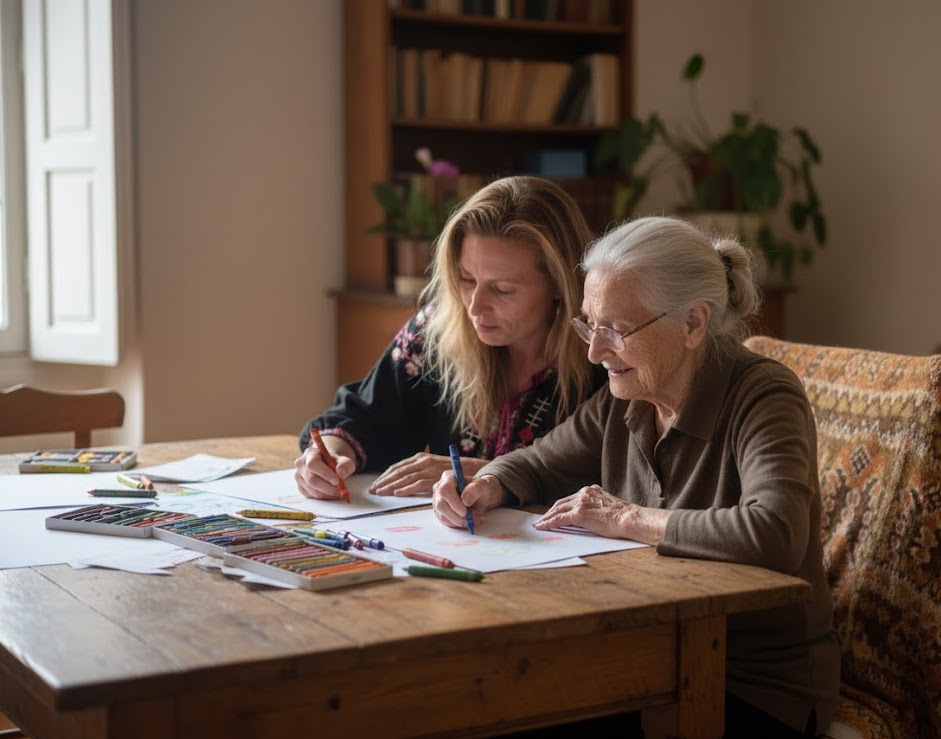
Creative art therapy is part of our holistic approach to emotional healing and personal growth. We work along with you to explore your emotions, express your inner thoughts, and develop new coping strategies. We provide a safe and non-judgmental space for clients to tap into their creativity, access their emotions, and embark on a journey of self-discovery and healing.
Whether you are dealing with trauma, stress, anxiety, or simply seeking a creative outlet to enhance your emotional well-being, our clinic offers tailored sessions to help you navigate your unique emotional challenges and foster personal growth. Through the transformative power of artistic expression, we aim to support you in your journey towards emotional healing and a more fulfilling life. Your emotional growth and well-being are important to us, and we are here to assist you every step of the way.

History of Using Creative Art in Emotional Healing
The use of creative art as a therapeutic tool dates back to ancient civilisations, where art was recognised for its ability to evoke emotions, tell stories, and heal. In modern times, pioneers like Margaret Naumburg and Edith Kramer laid the foundation for art therapy as a distinct therapeutic practice. Today, creative art therapy has evolved into a well-established discipline used to address various emotional and psychological issues.
The formal discipline of art therapy began to crystallise in the mid-20th century. In 1942, British artist Adrian Hill coined the specific term “art therapy” after discovering the restorative benefits of drawing while recovering from tuberculosis, later publishing his findings in Art Versus Illness (1945).
Across the Atlantic, the 1940s and 50s saw the emergence of the field’s two primary matriarchs in the United States. Margaret Naumburg, often called the “Mother of Art Therapy,” developed “dynamically oriented art therapy,” viewing art as symbolic speech that allowed the release of unconscious conflicts, a distinct psychoanalytic approach. Edith Kramer she emphasised “art as therapy,” arguing that the creative process itself was the primary healing agent. This era of foundational growth culminated in 1969 with the founding of the American Art Therapy Association (AATA), which standardised training and solidified the practice as a legitimate profession.
In the late 20th century and into the 2000s, the field evolved from its psychoanalytic origins to embrace broader scientific and expressive frameworks. During the 1970s and 80s, pioneers like Shaun McNiff and Paolo Knill helped expand the discipline into “expressive arts therapy,” advocating for an intermodal approach that integrated movement, sound, and visual art to deepen emotional access. As the field matured, it began to integrate rigorously with neuroscience and trauma research.
Contemporary figures such as Cathy Malchiodi have been instrumental in the 21st century in demonstrating how creative interventions can support neurobiological regulation, particularly in treating trauma.
Today, art therapy is worldwide, supported by a growing body of empirical research that validates the ancient intuition that creativity is a powerful engine for psychological repair.

Start Your Creative Healing Journey
If you feel ready to explore your emotions in a gentle and supportive way, creative art therapy can help you move forward with confidence.
Our sessions make it easy to connect with your inner world, express what feels hard to say, and discover new tools for emotional resilience. Reach out today to begin a guided process of self-discovery, healing, and personal growth.